



04-12-25
Nina Yuen’s Spell of the Sensuous
Author: Eleni Maragkou
At the very fringe of our awareness lies an intimate world, “infused by birdsong, salt spray, and the light of stars,” as David Abram described in The Spell of the Sensuous (1996). Here, branches become bodies, leaves transform into dueling animals, and landscapes loom as existential forces. Sensory perception is inherently synaesthetic; ordinary phenomena are amplified, intensified, and made extraordinary.
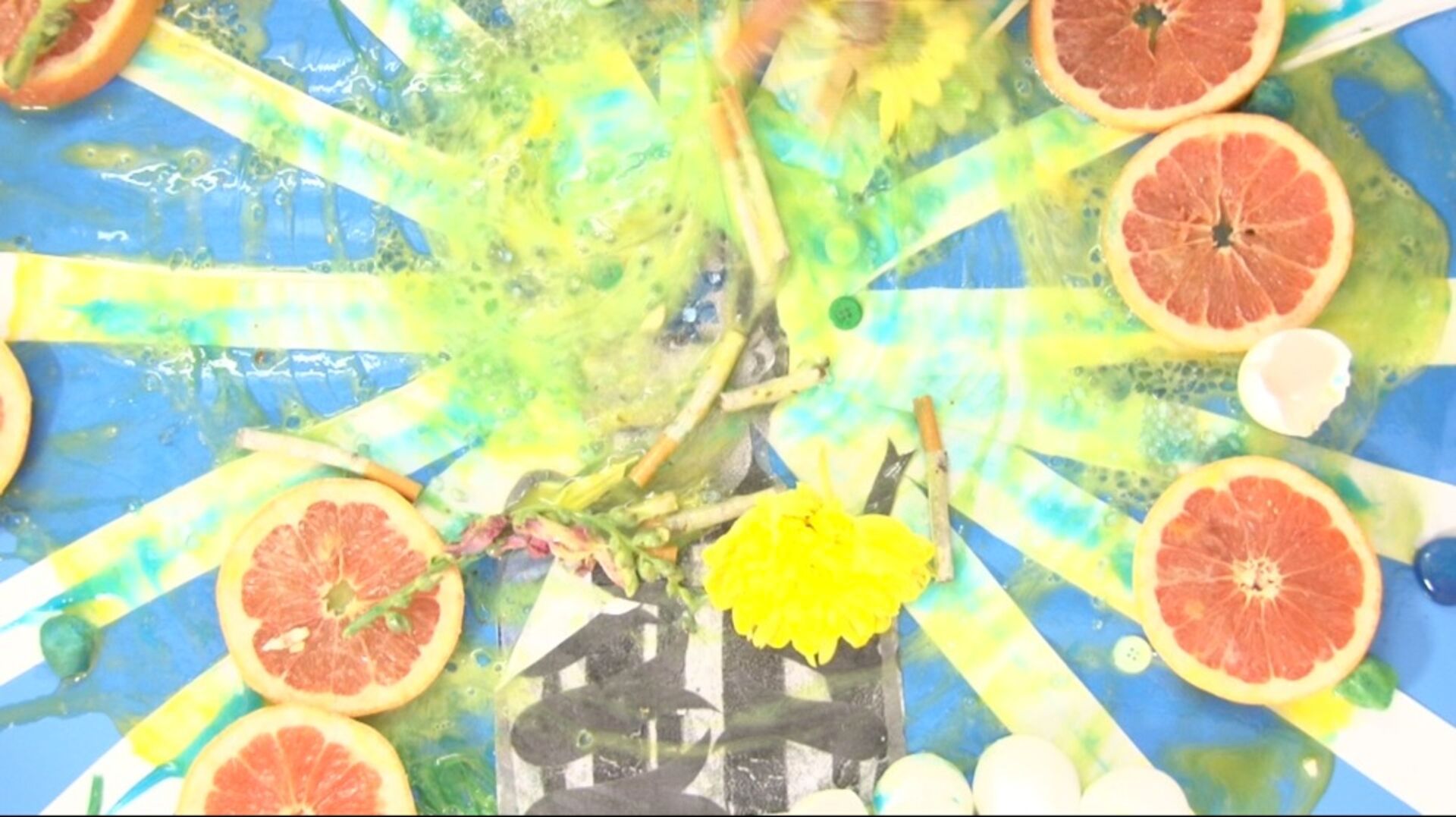
In her videos, visual artist Nina Yuen constructs such worlds, where the ultrapersonal intersects with the collective human experience. Diary entries, childhood memories, forgotten figures from art and history, and reflections on death, love, beauty, and creativity interweave in films where fiction and reality are nearly indistinguishable. Yuen treats video as a tactile medium: her films are sensuous assemblages of image, sound, and narrative that feel both intimate and expansive. Her medium, video, always remains vulnerable to context and display conditions, a sensibility that poses both a challenge and a methodological chance.
Having emerged around a time during which a confessional, more inward style of work gained prominence in contemporary performance art, Yuen’s practice exists at the intersection of technological mediation and psychological excavation. By entwining personal stories with found texts and cultural references, she creates works that are simultaneously personal and widely resonant. Working in deliberate isolation, she operates as both subject and observer, collapsing the traditional distance between performer and documentarian.
Recurring themes – mortality, love, beauty, and creativity – thread through her short films, often around five minutes long, yet these weighty subjects are always approached with curiosity and playfulness. Yuen immerses herself in alternative living environments she constructs for each work. In Clean (2006), she performs everyday beauty rituals in unexpected, idiosyncratic ways; in Juanita (2010), she inhabits her mother’s cat, exploring mortality, ritual, and the measurement of time and distance. Mr. President (2012) unfolds in a dreamlike, stream-of-consciousness style, balancing memory, childhood, loss, and fantasy. Drawing on sources ranging from magic and nature to her parents’ lives, the painter Joe Andoe (Andoe, 2013), feminist writer Simone de Beauvoir (Hermione, 2013), and her students, Yuen’s work transforms the ordinary into the uncanny, revealing the infraordinary, the profound within within everyday life.
Her most recent video work, Samantha (2025), extends these explorations while engaging with contemporary concerns around artificial intelligence. Yuen transforms her archive of personal photographs into a meditation on female identity, aging, and technology. The film weaves poetic vignettes about “Manic Pixie Dream Girls,” robotic women seeking autonomy, and the complex relationships between inner and outer selves. AI-generated images of Yuen’s younger self converse with fictional “unrealpersons,” creating tension between authentic identity and artificial representation. Through these fragmented narratives, Samantha examines feminine archetypes, self-perception, and the quest for authenticity in a world increasingly mediated by algorithmic and artificial beings.
In conversation with LI-MA’s Eleni Maragkou, the artist reflects on making work in Hawai‘i, the personal narratives that shape her practice, her relationship to confessional art, and the ideas behind her latest piece.
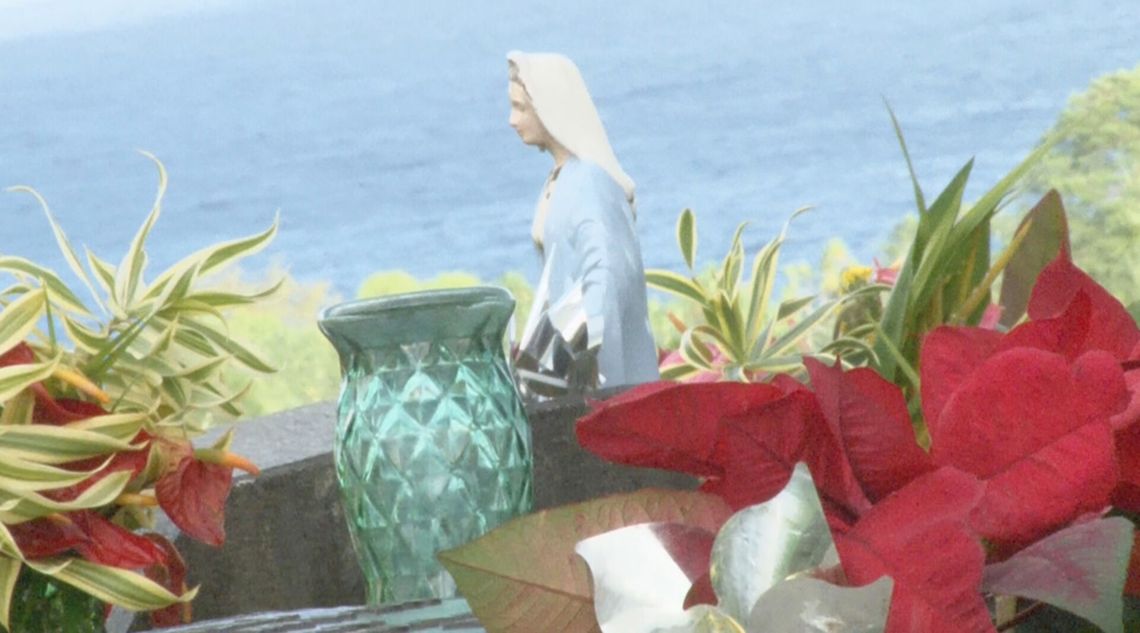
You were born in Hawaiʻi. How did the sensory environment of the islands shape your early awareness of space, time, and the natural world?
A lot of my films are shot on the street where I grew up. The places where I played as a kid became the places where I "played" to make my films. To make a film, I go into the forest, find sticks and rocks and flowers, and those things become characters as I "play" in my films.
Growing up, were there specific stories, myths, or cultural practices that informed your approach to narrative and performance?
The songs my father sang to me as a kid became part of the mythology of the stories I tell in my films. In particular, I collected stories of extinction, impermanence, and loss from his songs. My mother also invented a lot of rituals for milestones. When I menstruated for the first time, she took me into the woods and performed a ritual of "becoming a woman" with me. Remixes of her rituals appear in my work.
Your work treats video as a tactile, almost sculptural medium. How do you approach the interplay of video, sound, and narrative to create a sensuous experience?
A lot of my work is evoked in the listener's imagination as one piece of text hits up against another piece of text, and the images of one scene hit up on the images of another scene. But while the work might seem additive, like lots of layers piled upon each other, my actual process is like reductive sculpture. I have a huge amount of content that I start with, and I do a lot of carving out and throwing things away until the final film remains.
What is your connection to LI-MA?
I have also been inspired by the films I have seen in festivals that are distributed by LI-MA. I make my work in conversation and in response to the curation of work from its distribution.
Your practice weaves the confessional with the universal. Can you speak more on how personal narratives resonate with collective experience?
It's hard to mark where the individual person ends and the collective experience begins. We speak about the personal in a universal language, sharing many of the same words, even though those words mean somewhat different things to different people. I think if we are articulate or precise enough in telling individual stories, it can resonate in the universal by drawing eloquence from the universal.
Mortality, beauty, love, and creativity recur throughout your work. How do you balance these weighty themes with playfulness and curiosity?
A lot of times a highly philosophical concept doesn't reveal itself as such at first: it just feels like the sticky question at the center of something. Working with sound, image, gesture, I am able to grapple these themes without relying on the conventions of academic thought. The work can be an intuitive truth, rather than a verified one.
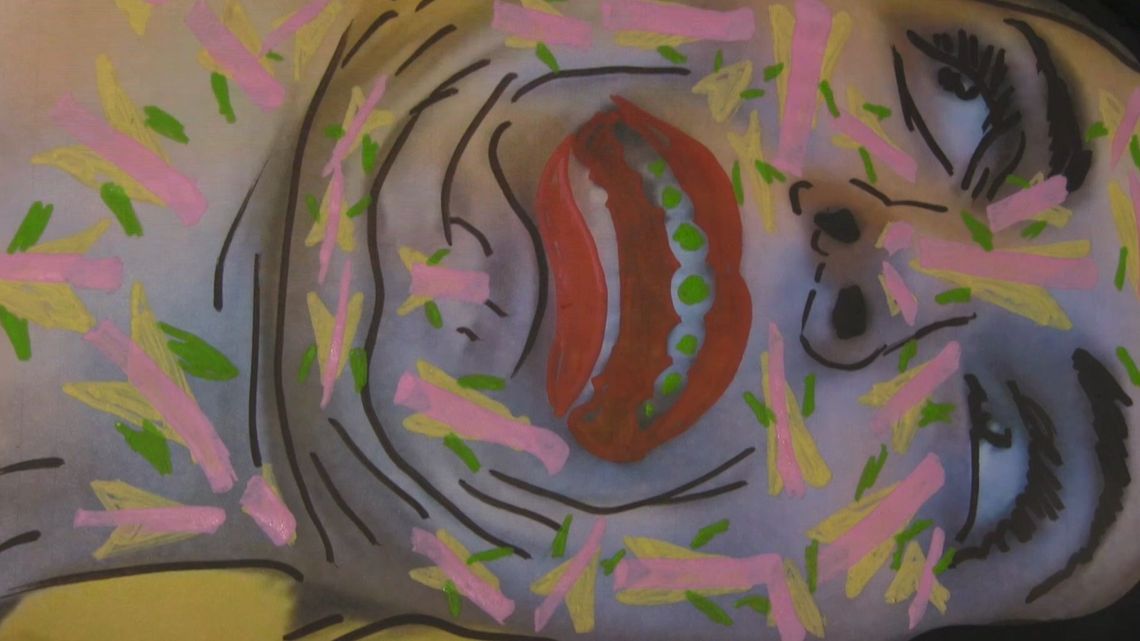
Your films often blur the line between reality and fiction, transforming the familiar into the uncanny. How do you cultivate this tension in your storytelling?
If I make my film on something urgent and true for me, the audience can tell it's coming from something lived. I train AI models on real photos and video stills from my life, and animate them to real words from my diary. The audience can automatically sense the unreal and the real combined, and the strange moments when the unreal is more accurate at expressing the real.
Your work references artists, writers, and personal histories, from Joe Andoe to Simone de Beauvoir. It also incorporates found texts, domestic objects, and cultural fragments in ways that feel both personal and communal. How do these influences interact with your own creative voice? And how do you decide what enters this intimate universe?
I quote voices from popular culture, poems, films that intersect my everyday life, transforming them through embodiment and collage. I work on a film by hunting for things, collecting fragments. Through collage, I "hear" the different voices talk to each other, across time, and see how their meaning changes when recontextualised.
Samantha (2025) is a meditation on female identity, aging, and artificial intelligence, examining archetypes of femininity and self-perception. What drew you to these topics?
I can't imagine a more magical technology than text-to-image models, and I still can't believe that this was invented in my lifetime. When I first started working with AI, I felt the presence of a ghost in my studio, as if there was a consciousness there with me, generating the images for me. I made Samantha to compare the act of creating AI images with the history of the way humans have generated perfect imaginary women.
Why did you decide to use AI and how does it allow you to probe identity differently than more traditional video methods? How do you use it while also reflecting on ethics?
I'm interested in wrestling these tools out of the hands of big tech and using their power to do things that are in contradiction with their original designs. There is a depersonalised quality to AI images. I want to repurpose them to allow them to speak intimately. There's a danger that AI can steer our cognition. I'm interested in finding ways to use it to prevent it from using me.
Discover more about Nina Yuen by reading our Artist in Focus feature on the LI-MA website.